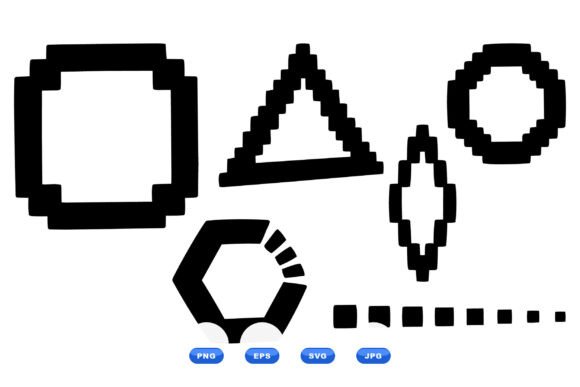
Pixel Art Geometric Shapes SVG Embroidery Review
When I sit down to evaluate a new digital asset for my embroidery workflow, I am rarely looking for just another pretty picture. I am looking for viability. Can this design hold up under the tension of a machine? Does it translate well from screen to fabric? Is it something a customer will actually wear or display, or is it just another cluttered file that ends up in the "maybe later" folder? This is exactly how I approached Pixel Art Geometric Shapes SVG, a minimalist vector graphic featuring bold black-outlined geometric forms against a clean white background.
At first glance, the aesthetic is undeniably retro. It taps into that nostalgic pixel art trend that has permeated fashion and interior design for years. But as an experienced designer, my job is to look past the initial cool factor and assess the structural integrity of the design when it is converted into thread. The product description highlights squares, triangles, circles, hexagons, and ellipses arranged in a minimalist digital style. On paper, this sounds simple. In practice, simplicity is often where designs either shine brilliantly or fail catastrophically. Let’s break down why this specific geometry works so well for real-world projects.
The First Impression: Minimalism Meets Structure
The immediate mood created by Pixel Art Geometric Shapes SVG is one of modern clarity. Unlike organic floral patterns or complex illustrative scenes that can become muddy when stitched, geometric shapes rely on hard edges and distinct boundaries. This makes them inherently easier to digitize with precision. The black outlines provide a strong visual anchor, which is crucial for embroidery because thread cannot replicate the infinite resolution of a digital vector. Instead, we rely on high contrast and clear separation between elements.
I found myself thinking about how this design would behave on different textiles. The stark contrast of black outlines on a white (or light) background suggests that this design demands a clean canvas. It feels best suited for structured fabrics where the stitch definition can remain sharp. If you are a small business owner looking to add a touch of contemporary flair to your inventory without overwhelming the wearer, this design offers a sophisticated balance. It is not loud; it is confident.
Real-World Application: From Concept to Finished Product
To truly understand the value of any machine embroidery design, you have to imagine it on a finished product. I ran several scenarios through my mental workshop to see where Pixel Art Geometric Shapes SVG fits best.
Consider a custom embroidered tote bag. Tote bags are a staple for craft fairs and Etsy sellers. They are practical, affordable, and highly visible. Placing this geometric pattern on a canvas tote creates an instant boutique feel. The shapes—particularly the hexagon and triangle—add a playful yet organized vibe that appeals to a broad demographic, from students to young professionals. Because the design is relatively sparse compared to all-over prints, it allows the natural texture of the canvas to show through, creating a beautiful interplay between the fabric weave and the smooth satin or fill stitches.
Another strong candidate for this design is apparel, specifically sweatshirts or hoodies. There is a growing trend in streetwear that embraces blocky, retro graphics. A chest-sized placement of these geometric shapes on a heather grey or black sweatshirt could be incredibly striking. However, this brings us to a critical consideration: fabric color. Since the primary feature is the black outline, placing this on a dark garment requires careful planning. You might need to use a contrasting thread color for the outlines or rely heavily on negative space if the base fabric is dark. For a white or light-colored sweatshirt, the black outlines will pop with exceptional clarity.
I also see potential in baby items and nursery decor. The shapes are soft enough in their simplicity to work well on burp cloths, bibs, or small blanket borders. Parents often gravitate toward gender-neutral designs, and this geometric set fits perfectly into that category. It is unisex, modern, and clean. When turned into a personalized gift, such as a baby onesie with a name added nearby, the geometric shapes provide a sturdy backdrop that doesn’t compete with the lettering.
Technical Considerations and Stitch Behavior
As I evaluated the file for potential conversion into an embroidery file, I focused on the technical aspects that determine stitch quality. The design relies on outlines, which typically translates to satin stitches in digitizing. Satin stitches are forgiving but can pucker if the density is too high or the underlay is insufficient. Given the clean lines of the squares and circles, the risk of puckering is lower than with dense fill areas, provided the hoop size is respected.
The inclusion of various shapes like ellipses and hexagons adds visual interest without adding significant complexity. An ellipse, for instance, requires a slightly different stitch path than a circle to maintain its shape, especially at smaller sizes. This design likely handles these transitions well because the overall scale appears generous enough to accommodate the necessary stitch length variations. However, if you plan to shrink this design down significantly for a tiny detail on a cap, you must test it carefully. Tiny details in pixel art styles can sometimes lose their character if the individual "pixels" become indistinguishable from single stitches.
Stabilizer choice is paramount here. Because the design features outlined shapes, it is somewhat lightweight in terms of total thread coverage. This means it is less likely to distort stretchy knits, making it a good option for t-shirts or activewear, provided you use a cut-away stabilizer for durability. For woven fabrics like denim or cotton twill, a tear-away stabilizer might suffice, but always err on the side of caution with a fusible web or heavy tear-away to ensure the fabric remains flat.
Where to Exercise Caution
While this design is versatile, there are contexts where it might not perform as intended. Avoid using this design on highly textured fabrics like bouclé or heavy chenille, as the texture will interfere with the crispness of the black outlines. Similarly, on very thin or sheer fabrics, the stability of the satin stitches might cause the material to gather unevenly unless a proper backing is used.
Curved surfaces, such as the front panel of a baseball cap, require precise hooping. While the geometric shapes are rigid, the fabric around them needs to lay flat. If the curve is too aggressive, the straight lines of the squares and triangles may appear distorted after stitching. Always inspect small details on curved surfaces during your test run.
Brand Value and Customer Appeal
For Etsy sellers and craft business owners, the visual appeal of a product listing is everything. Pixel Art Geometric Shapes SVG lends itself beautifully to printable mockups. Because of its clean lines and lack of distracting background noise, it photographs well and looks professional in digital previews. Customers appreciate designs that look intentional and polished. A messy stitch job or a design that looks blurry on screen can erode trust, but a crisp geometric pattern communicates professionalism.
This design also enhances the perceived value of a handmade product. It moves beyond generic clipart vibes and enters the realm of curated design assets. When customers see a cohesive geometric theme, they associate it with higher-end brands. This is particularly true for commercial embroidery projects where branding consistency is key. Imagine a local coffee shop ordering branded aprons with this subtle geometric motif—it says "modern cafe" without shouting.
Practical Designer Notes for Implementation
If you decide to incorporate Pixel Art Geometric Shapes SVG into your next project, keep these practical tips in mind:
- Test on Scrap Fabric: Never go straight to the final product. Test the design on a scrap of the same fabric type to check for puckering, thread breaks, or tension issues.
- Check Thread Color Contrast: If you are embroidering on dark fabric, consider using a white or metallic thread for the outlines to ensure visibility. The original black-on-white concept relies on high contrast, so maintain that principle regardless of your thread choice.
- Review Stitch Density: Ensure the digitized file does not have excessive density in the solid shapes. Too much thread can make the fabric stiff and uncomfortable, especially on apparel.
- Confirm Hoop Size: Verify that the design fits comfortably within your standard hoop sizes. If the design is large, you may need to split the file or use a larger frame.
- Inspect Small Details: Zoom in on the smallest shapes, like tiny triangles or hexagon corners. Are they legible? Will they fray over time? If they are too small, consider simplifying the design.
- Verify Licensing: Before selling finished items or digital products, double-check the license terms associated with the vector file. Some licenses restrict commercial use or require attribution.
In conclusion, Pixel Art Geometric Shapes SVG is a strong contender for designers seeking clean, modern aesthetics that translate well to thread. Its strength lies in its simplicity and versatility, making it suitable for everything from tote bag design to holiday embroidery gifts. By paying attention to fabric choice, stabilizer support, and stitch quality, you can create a finished product that stands out in a crowded marketplace. It is a reliable, stylish tool in any embroidery project toolkit.