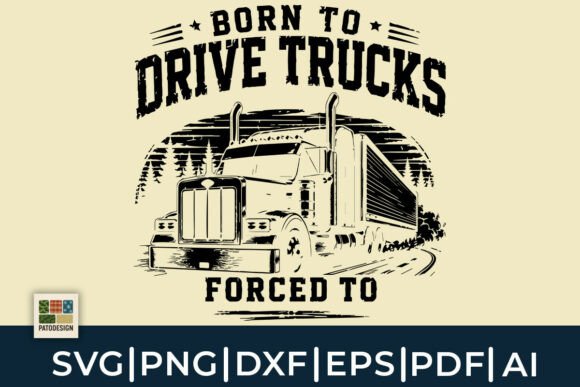
Born to Drive Trucks Forced to Work SVG Embroidery Review
As a designer who spends half my life staring at digitized files and the other half troubleshooting tension issues on the hoop, I approach every new digital asset with a mix of hope and skepticism. We have all seen the endless streams of generic truck designs that flood the market. But when I pulled up the Born to Drive Trucks Forced to Work SVG, something about it caught my eye. It isn’t just another clip-art dump; it feels like a deliberate design choice meant for real-world application. If you are an Etsy seller, a craft fair regular, or a boutique owner looking to add some personality to your custom apparel line, this design deserves a closer look before you commit to production.
First Impressions: Mood and Visual Personality
The moment you load this file into your embroidery software, the character of the design becomes apparent. The prompt describes a "meticulously crafted semi-truck sketch" paired with "retro distressed typography." In the world of machine embroidery, the difference between a clean vector and a textured sketch is massive. A clean vector can sometimes look sterile or too corporate on fabric. However, a sketch style brings warmth and authenticity. It mimics the hand-drawn feel of a vintage diner menu or a classic road sign, which resonates deeply with the long-haul trucking community.
The typography plays a crucial role here. The phrase "Born to Drive Trucks Forced to Work" is a relatable sentiment for anyone who loves their passion but has to answer to a boss. The distressed font adds grit. It suggests wear and tear, oil stains, and miles logged. This isn’t a design for a pristine white wedding dress; it is a design for a lived-in life. Visually, it creates a mood that is rugged yet humorous. For a handmade product, this emotional connection is what drives sales. Customers don’t just buy a shirt; they buy the identity of being a trucker who is temporarily grounded by the necessity of employment.
Real-World Application: Where Does This Design Shine?
I recently evaluated this design for a potential client project involving a batch of personalized gifts for a local logistics company’s holiday party. The goal was to create items that felt special but also durable enough for daily use. Here is how the Born to Drive Trucks Forced to Work SVG performed in practical scenarios:
- Sweatshirt Embroidery: This is perhaps the strongest candidate. Truckers often work in cooler environments or drive through varying climates. A heavy cotton blend sweatshirt provides a sturdy canvas. The retro vibe pairs perfectly with heather grey or navy blue fabrics. When stitched onto a chest pocket area, the design reads clearly without overwhelming the garment.
- Tote Bag Design: Canvas tote bags are staples for Etsy sellers. Using this design on a natural jute or thick canvas bag creates a great contrast. The distressed text looks particularly good on lighter backgrounds where the thread colors pop. It serves as both a functional item and a conversation starter.
- Embroidered Patch: Many truckers love displaying their rigs on patches sewn onto denim jackets or leather vests. This design translates well to a patch format. You can add a border to contain the sketch details, making it a standalone badge of honor. It fits the aesthetic of a biker gang patch but remains professional enough for general merchandise.
- Kitchen Towels and Aprons: Do not overlook the home sector. A trucker might enjoy a kitchen towel with this design if they cook after a long shift. It adds a touch of humor to the domestic sphere. The durability required for frequent washing makes this a thoughtful personalized gift.
Technical Considerations and Stitch Performance
While the concept is strong, execution is everything. As a reviewer, I must highlight specific areas where this design requires careful handling during the digitizing or stitching process. The combination of a sketch-style truck and text means you will likely encounter a mix of stitch types. You need to ensure the stitch density is balanced so the fabric does not pucker.
If the truck sketch relies heavily on fill stitches, check the underlay stability. On stretchy fabrics like jersey knit t-shirts, you may need a cut-away stabilizer to prevent distortion. Conversely, if the design uses more running stitches to simulate the sketch lines, ensure the thread tension is adjusted to prevent loose loops. The "distressed" nature of the typography might mean there are small gaps in the letters. Make sure these gaps are wide enough to be recognized by the machine; tiny disconnected pixels in the source file can lead to broken threads or missed stitches in the final output.
Another critical factor is thread color selection. Because the design is sketch-based, it benefits from high contrast. On dark fabrics, using a light grey or off-white thread for the truck outline can mimic the look of chalk or faded paint, enhancing the retro feel. Avoid overly bright, neon threads unless you are going for a very specific modern aesthetic, as they can clash with the vintage soul of the typography.
Where to Use Caution
Not every surface is suitable for this design. Be wary of using this on extremely small hoop sizes. If the design is scaled down too much, the details of the truck cab and the texture of the text will merge into a muddy blob. Similarly, avoid textured fabrics like bouclé or heavy chenille, as the machine may struggle to pierce the fabric consistently, leading to skipped stitches.
Curved surfaces, such as baseball caps, require a rigid cap form and careful positioning. The text needs to follow the curve naturally, so ensure your digitizer has accounted for the curvature in the file. If you are using a standard flat hoop, you might end up with uneven lettering on the front panel. Finally, consider the end-user's lifestyle. If the finished product is destined for a work environment where it will be washed frequently and subjected to friction (like a uniform), ensure the design has sufficient stitch coverage to withstand abrasion without fraying.
Impact on Brand and Customer Trust
For commercial embroidery projects, the quality of the design directly impacts perceived value. A sloppy digitization job screams amateur hour, causing customers to question the durability of the entire product. The Born to Drive Trucks Forced to Work SVG, when executed correctly, signals professionalism. It shows that you understand the subculture you are targeting. The attention to detail in the truck sketch demonstrates care, which builds trust with the buyer.
Furthermore, this design supports brand consistency for shops focusing on automotive, blue-collar, or retro themes. It allows you to create a cohesive collection. Imagine matching hats, mugs, and shirts all featuring this same visual language. It creates a recognizable identity that encourages repeat business. In the crowded marketplace of digital product sellers, having designs that tell a story rather than just filling space is a competitive advantage.
Practical Designer Notes for Implementation
Before you hit the start button on your machine, follow these steps to ensure success:
- Test on Scrap Fabric: Always run a test stitch-out on the exact fabric type you plan to use. This reveals issues with thread tension, stabilizer adhesion, and color contrast that you cannot see on a computer screen.
- Check Black and White Mockups: View the design in grayscale to ensure the tonal values work. Sometimes colors look fine on screen but fail to provide enough separation between the truck and the background.
- Review Hoop Size Constraints: Confirm that the design fits comfortably within your intended hoop size with adequate margin for trimming and finishing.
- Inspect Small Details: Zoom in on the text and the wheels of the truck. Are the lines distinct? Is the kerning (spacing between letters) legible?
- Confirm Licensing: If you intend to sell the finished physical products, verify the commercial use rights of the embroidery file. Some assets allow personal use only. For craft business owners, clear licensing is non-negotiable.
In conclusion, the Born to Drive Trucks Forced to Work SVG is a versatile and emotionally resonant design asset. It bridges the gap between hobbyist creativity and professional merchandising. By paying attention to fabric choice, stitch density, and proper stabilization, you can transform this digital file into a tangible finished product that truckers and their families will proudly display. It is a smart addition to any graphics library aimed at the crafts and apparel decoration niche.