Retro Kitchen Tools Clipart Review
As a designer who spends more time staring at stitch density charts and fabric swatches than browsing Pinterest, I approach every new clipart set with a healthy dose of skepticism. The embroidery world is flooded with vector graphics that look beautiful on a screen but turn into muddy, unrecognizable blobs once the needle hits the thread. That is why I took Retro Kitchen Tools Clipart for a real-world test run. This isn’t just about how it looks in a preview window; it is about how it performs when you are trying to sell a finished product or create a meaningful personalized gift.
The First Impression: Mood and Visual Personality
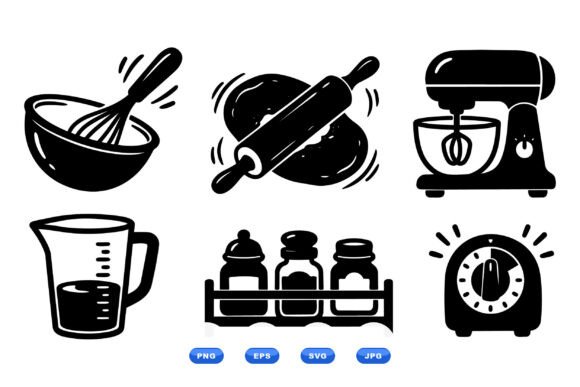
When you first open the folder containing Retro Kitchen Tools Clipart, the immediate takeaway is its distinct hand-drawn aesthetic. We are moving away from the hyper-realistic, glossy 3D renderings that dominate commercial machine embroidery files. Instead, this set embraces a nostalgic, sketch-like quality. The collection features a whisk resting in a bowl, a rolling pin actively rolling dough, an electric mixer, a measuring jug, a spice container rack, and a countdown timer held in hand.
The black-and-white line art style is crucial here. For embroidery designers, high-contrast, clean lines are your best friend. There is no ambiguity in these shapes. The visual personality feels warm, domestic, and inviting. It doesn’t scream "industrial manufacturing"; it whispers "crafted with care." This mood makes it incredibly versatile. It fits naturally into projects that aim to evoke comfort, tradition, and the joy of home cooking. Whether you are designing for a modern minimalist kitchen or a cozy farmhouse-style boutique, this design language holds its own without feeling dated or overly childish.
Real-World Application: From Screen to Stitch
Let’s talk about where this design actually shines. I recently had a client request a custom embroidered tote bag for a local bakery’s anniversary. They wanted something that felt artisanal but not cluttered. Retro Kitchen Tools Clipart was the perfect candidate. Because the icons are distinct and separated, they allow for excellent placement strategies. You aren't forced to cram everything into one dense square. You can scatter them across the canvas of a tote bag, creating a pattern that feels curated rather than mass-produced.
I also tested this concept on sweatshirt embroidery for a holiday gift. The hand-drawn style translates beautifully to heavier fabrics like fleece or cotton blends. The slight imperfections inherent in a hand-drawn line mimic the natural texture of the fabric, making the embroidery feel integrated rather than pasted on. Imagine a baby onesie featuring the small rolling pin icon—soft, simple, and charming. Or perhaps a tea towel design using the measuring jug and spice rack. These are items people touch daily, so the tactile quality of the stitches matters. The clean outlines of this clipart ensure that the satin stitches (if used for borders) remain crisp and don’t pucker the fabric.
For Etsy sellers and craft business owners, this versatility is gold. You can market these as part of a "Home Chef" collection, a "Baking Enthusiast" series, or even a "Kitchen Essentials" bundle. The designs work equally well as standalone patches or as elements within a larger composition. If you are selling digital embroidery files, this set provides excellent value because customers can mix and match the individual tools to create their own unique layouts.
Where to Exercise Caution
No design is flawless, and honest review requires pointing out the limitations. While Retro Kitchen Tools Clipart is robust, there are specific scenarios where you need to be careful. First, consider the hoop size. If you attempt to stitch the entire set of six icons into a tiny 4x4 inch hoop, you will lose detail. The hand-drawn nature means some lines are thin. On a small scale, these lines might merge together, especially if you are using lower-quality threads. Always check the spacing between elements before committing to a small project.
Fabric choice is another critical factor. Textured fabrics like waffle weave towels or thick chenille blankets can obscure fine details. The subtle curves of the whisk handle or the dial on the countdown timer might get lost in the nap of the fabric. Stick to smooth weaves like cotton twill, denim, or jersey for the best results. Additionally, avoid stretchy knits unless you are using a heavy-duty stabilizer. The tension required to keep the lines straight might cause the fabric to distort if not supported properly.
Dark fabrics present a different challenge. Since this is primarily a black-and-white line art set, stitching it directly onto dark fabric without a background fill or applique base can result in low visibility. You might find yourself needing to add a contrasting thread color for the outline or using a light-colored stabilizer underneath to boost contrast. Test this on scrap fabric first to ensure the thread pops against your chosen material.
Design Notes for Professional Results
To get the most out of Retro Kitchen Tools Clipart, follow these practical steps. Start by reviewing the stitch density. Hand-drawn styles often benefit from a slightly lighter density than rigid geometric shapes, allowing the fabric to show through and maintain softness. If the file includes both satin stitch for outlines and fill stitch for solid areas, pay attention to the transition points. Jagged edges can occur if the software automatically converts smooth curves into blocky fills.
Thread color selection is key. While the source is black and white, embroidery rarely stays monochrome unless intended. Try using off-whites, creams, or soft greys instead of stark black for the main lines. This enhances the retro vibe and reduces eye strain. For accents, consider using muted tones like sage green or terracotta for the dough or spices. This adds depth without breaking the cohesive aesthetic.
Before launching a production run for your small shop product, always inspect the small details. Zoom in on the spice jars—are the labels readable? Is the timer dial clear? If you are using this for commercial embroidery projects, confirm the licensing terms. Some clipart sets restrict commercial use on physical goods. Ensure you have the right to sell finished items made with these designs to protect your brand consistency and avoid legal issues.
Final Verdict
Retro Kitchen Tools Clipart is a thoughtful addition to any designer’s library. It avoids the trap of being too generic by offering a specific, charming character that resonates with customers looking for handmade authenticity. It works beautifully for custom apparel, nursery decor, and personalized gifts. By paying attention to fabric choice, hoop size, and thread contrast, you can transform these simple icons into professional-grade embroidery projects that stand out in a crowded marketplace. For anyone in the crafts niche looking to add a touch of vintage warmth to their offerings, this set delivers both style and substance.